Glacier National Park in winter feels like a different place. The summer crowds are gone. Snow covers the cedar forests, and Lake McDonald goes quiet and still. Some days, you may walk for an hour and see only deer tracks.
Most roads close and the days are short, but with good planning it can be one of the most peaceful trips you take.
This guide covers what is open, what you can do, what it costs, and how to stay safe. If you are still choosing dates, it helps to start by picking the best season for your Glacier trip.
Is Glacier National Park Open in Winter?
Yes. Glacier National Park is open all year, including winter. But most roads, visitor centers, and services close for the season. In winter, almost all visitors use the west side of the park, starting at the West Glacier entrance.
Here is what you can expect:
| What | Winter status |
|---|---|
| West Entrance (West Glacier) | Open |
| Going-to-the-Sun Road | Plowed only from West Glacier to Lake McDonald Lodge |
| Apgar Visitor Center | Open on weekends, as staffing allows |
| St. Mary and Logan Pass Visitor Centers | Closed |
| Lodging inside the park | None in winter |
| Apgar restrooms | Open all year |
| Camping | Primitive camping only, at Apgar Campground Loop B |
West Glacier is the main winter gateway. It is also close to many vacation rentals. For example, our Middle Fork Retreat is about 10 miles from the park.
What to Expect: Weather, Daylight and Road Conditions
Glacier National Park in the winter is cold, snowy, and quiet. Here is what to expect.
Winter Weather in Plain Numbers
These are long-term averages for West Glacier, near the park entrance:
| Month | Average high | Average low |
|---|---|---|
| December | 29°F | 18°F to 20°F |
| January | 31°F | 18°F to 20°F |
| February | 33°F to 35°F | 19°F |
| March | 43°F | 25°F to 26°F |
These are averages. Cold snaps can drop well below zero, and higher areas are colder.
Short Days
In late December, West Glacier gets only about 8 hours and 17 minutes of daylight.
- The earliest sunset is around 4:40 p.m. in mid-December.
- The latest sunrise is around 8:27 a.m. in early January.
Tip: Plan your outdoor time between about 10 a.m. and 3 p.m. That is when it is lightest and often a little warmer.
Which Roads You Can Drive
In winter, the park plows the Going-to-the-Sun Road only from West Glacier to Lake McDonald Lodge. “Plowed” means road crews clear the snow so cars can drive on it. Past the lodge, the road is left under snow and closed to cars.
That unplowed section becomes a wide, gentle path for walking, snowshoeing, and skiing. The full road over Logan Pass opens again in summer, so it is worth knowing how long the full Going-to-the-Sun Road drive takes in summer for a return trip.
Most other park roads close in late fall. Always check the park’s road status page before you drive.
Glacier National Park Month by Month (December to March)
Each winter month feels a little different. This table shows what to expect.
| Month | What it’s like | Best for | Tip |
|---|---|---|---|
| December | Snow builds up and days are at their shortest. Holiday lights in nearby towns. | Quiet walks, holiday trips | Go out midday. Sunset comes before 5 p.m. |
| January | One of the coldest months, with lots of snow. | Snowshoeing, deep winter scenery | Ranger-led snowshoe walks usually start mid-January. |
| February | Cold and snowy, with a deep snowpack. | Cross-country skiing, photos | Good month for a cabin weekend with a fireplace. |
| March | Longer days and a bit warmer, but still winter in the park. | Skiing with more daylight | Ranger walks usually end in mid-March. |
Glacier National Park Winter Activities
Most activities during winter happen near Apgar and Lake McDonald.
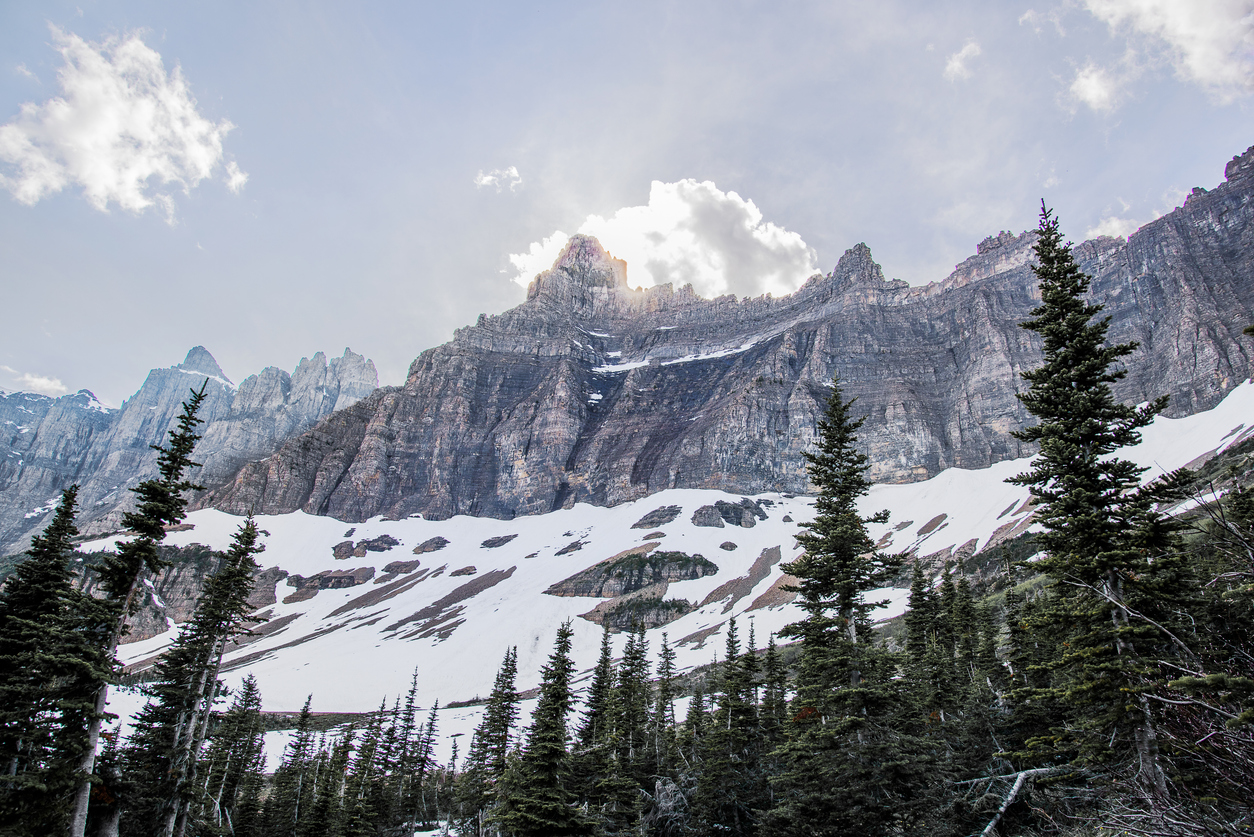
Snowshoeing
Snowshoes are wide frames you strap to your boots. They spread out your weight so you sink less into deep snow. If you can walk, you can snowshoe.
The easiest way to start is a free ranger-led snowshoe walk:
- When: Saturdays and Sundays at 1 p.m., usually from mid-January to mid-March
- How long: About two hours
- Snowshoe rental: $2 at the Apgar Visitor Center, starting one hour before the walk
- Age: Not recommended for children under 6
- Cold-weather rule: Walks are canceled if West Glacier temperatures are forecast below 10°F
Exact dates change each year, so check the park’s events calendar before you go.
Cross-Country Skiing
Cross-country skiing is different from downhill skiing. Instead of riding a lift and skiing down a steep hill, you glide forward across mostly flat ground. It is more like walking on long, thin skis.
Good beginner areas are Apgar and the wide, fairly flat unplowed road past Lake McDonald Lodge. Free trail maps are available at the Apgar Visitor Center and park headquarters.
Walk the Quiet, Unplowed Going-to-the-Sun Road
If the snow is packed down, you do not need skis or snowshoes. Park near Lake McDonald Lodge, where the plowing ends, and walk on.
For better grip on packed snow and ice, wear microspikes. These are small metal spikes on a rubber strap that slip over your boots, a bit like snow tires for your feet.
Watch for Wildlife and Tracks in the Snow
Fresh snow shows animal tracks clearly.
- White-tailed deer are the large animals you are most likely to see.
- Ravens stay in the park all winter.
- Ducks and other waterfowl often rest on Lake McDonald.
Never feed or walk toward wildlife. Watch from a distance with binoculars or a camera zoom lens.
Best Winter Photo Spots
If you want great Glacier National Park photos in winter, start with these easy spots:
- Lake McDonald shoreline at Apgar: Snowy peaks reflect in the water on calm days.
- Apgar Village: Snow on the small buildings and the lake behind them.
- McDonald Creek: Ice forms along the rocks, and the water stays a deep blue-green.
Bring extra camera batteries, since cold drains them fast.
Stargazing on Clear Winter Nights
Glacier and Canada’s Waterton Lakes National Park form the Waterton-Glacier International Dark Sky Park. This means the parks protect their night skies from light pollution, the glow from towns and streetlights that hides the stars.
Long winter nights give you more hours to look up, and clear nights also raise your chances of seeing the northern lights in this part of Montana.
Glacier National Park Winter Tours
If you are new to snow travel, a guide makes the day safer and easier. Only park-approved, or “authorized,” companies can guide inside Glacier. The park says its winter guides have first aid, CPR, and recent avalanche safety training.
The park’s current list of guided ski and snowshoe companies:
- Glacier Adventure Guides
- Glacier Hikes & Bikes
- Tour Glacier
- Whitefish Outfitters & Tours
- Wild North Guides
The Glacier Institute, a non-profit park partner, also runs winter classes. Check the park’s website for the latest list.
Winter Camping
Winter camping is only for people with cold-weather gear and experience.
- Apgar Campground Loop B stays open for primitive camping. “Primitive” means there is a vault toilet but no running water. Sites are first-come, first-served.
- Backcountry camping (camping away from roads, in the wild) needs a permit. Winter permit steps can change, so call the park at 406-888-7800 before you plan.
Winter Fun Just Outside the Park
Some great winter days happen just outside the park:
- Downhill skiing at Whitefish Mountain Resort
- Groomed Nordic trails around Whitefish. “Groomed” means a machine smooths and shapes the ski tracks for you.
- Dog sled tours near Olney, north of Whitefish
There are plenty more ideas for skiing and other winter fun around Montana if you are staying a full week.
Winter Fees and Rules
Glacier offers lower entrance fees in winter. The winter rate runs from November 1 to April 30. These are the park’s current rates:
| Pass type | Regular price | Winter price | Valid for |
|---|---|---|---|
| Private vehicle | $35 | $25 | 7 days |
| Motorcycle | $30 | $20 | 7 days |
| Per person (walking or biking) | $20 | $15 | 7 days |
| Glacier annual pass | $70 | $70 | 1 year |
Two more things to know:
- No vehicle reservations are needed. In 2026, the park dropped its vehicle reservation system for the whole year.
- Visitors from outside the U.S. who are 16 or older pay an extra $100 per person on top of the entrance fee. This does not apply if they enter with an annual pass or an America the Beautiful pass.
Fees can change, so check the park’s Fees and Passes page before your trip.
How to Stay Safe in Glacier in Winter
- Check for a winter storm warning. Look at the weather forecast the night before and the morning of your trip. Do not drive into a storm.
- Understand avalanches. An avalanche is a large mass of snow that suddenly slides down a steep slope. Stay off and away from the bottom of steep, snowy slopes. If you plan to go beyond easy, flat routes, check the Flathead Avalanche Center forecast first.
- Know the signs of hypothermia. Hypothermia means your body is losing heat faster than it can make it. Watch for strong shivering, confusion, and slurred speech. Get warm and dry right away.
- Expect weak cell service. Do not count on your phone for help or maps. Download maps before you leave.
- Tell someone your plan. Share where you are going and when you will be back.
- Drive carefully. Use good winter tires, carry chains if you have them, and slow down on icy roads.
What to Pack for a Winter Visit
| Category | What to bring | Why it helps |
|---|---|---|
| Clothing | Base layer, warm middle layer, waterproof jacket | A base layer is thin clothing worn next to your skin that pulls sweat away to keep you dry. |
| Feet | Insulated waterproof boots, wool socks | Cold, wet feet end a day fast. |
| Traction | Microspikes or snowshoes | Grip on ice and float on deep snow. |
| Hands and head | Warm gloves, hat, neck warmer | You lose a lot of heat from your head and hands. |
| Food and water | Snacks, lunch, hot drink in a thermos | Services in the park are very limited in winter. |
| Car kit | Blanket, shovel, ice scraper, phone charger, extra food | Helps if you get stuck or delayed. |
Getting There and Where to Stay
Flying In and Driving Distances
Most visitors fly into Glacier Park International Airport near Kalispell. It is about 30 miles from the West Entrance. Many travelers find it is the airport closest to Glacier, which makes winter trips simpler.
Approximate distances to the West Entrance:
| Starting point | Distance |
|---|---|
| Columbia Falls | About 15 to 19 miles |
| Whitefish | About 25 to 30 miles |
| Kalispell | About 33 miles |
| Glacier Park International Airport | About 30 miles |
In snow, give yourself extra time. A drive that takes 40 minutes in summer can take much longer on icy roads.
Where to Stay Near Glacier National Park in the Winter
There is no lodging inside the park in winter, so nearby towns are your home base. Staying close to West Glacier means less icy driving and more time outdoors.
A vacation rental gives you a full kitchen, space to dry wet gear, and a warm, quiet evening. For example, the Middle Fork Retreat sits about 10 miles from the park and has a fireplace for warming up after a day in the snow.
Pair Your Trip with a Day in Town
On very cold or stormy days, spend time in town instead. Whitefish and Columbia Falls both have local cafes, shops, and restaurants. For groceries, the closest full-service stores are in Hungry Horse and Columbia Falls.
A Simple One-Day Winter Plan
Here is an easy day that works for most visitors on a winter weekend:
| Time | Plan |
|---|---|
| 8:30 a.m. | Breakfast at your rental. Pack lunch, snacks, and a thermos. |
| 10:00 a.m. | Drive to Apgar. Walk the Lake McDonald shoreline and take photos. |
| 11:30 a.m. | Drive to Lake McDonald Lodge and walk a short way up the unplowed road. |
| 12:30 p.m. | Packed lunch, then head back to the Apgar Visitor Center. |
| 1:00 p.m. | Join the ranger-led snowshoe walk (weekends, mid-January to mid-March). |
| 3:30 p.m. | Watch the late light on the lake before sunset. |
| 5:00 p.m. | Back to the cabin for dinner by the fire. |
FAQs
Is it worth visiting Glacier National Park in the winter?
Yes, if you enjoy quiet, snow, and simple outdoor fun. You will not reach the high country, but you will have Lake McDonald and the forests almost to yourself.
Is Glacier National Park closed in winter?
No. Glacier National Park is open all year. In winter, most roads and services close, but the West Entrance, Apgar area, and the Going-to-the-Sun Road up to Lake McDonald Lodge stay open, weather permitting.
Can you visit Glacier National Park in winter?
Yes. You can drive in from West Glacier, walk or snowshoe along Lake McDonald, cross-country ski on the unplowed road, join a ranger-led snowshoe walk on weekends, and watch for wildlife.
When does Glacier National Park close for the winter?
The park itself does not close. Services and roads shut down in stages through the fall. The Going-to-the-Sun Road closes to cars beyond Lake McDonald Lodge once snow arrives, and winter entrance fees start on November 1.
Can you drive the Going-to-the-Sun Road in winter?
Only part of it. In winter, you can drive from West Glacier to Lake McDonald Lodge. The rest of the road is closed to cars and covered in snow until plowing finishes in late spring or early summer.
Do you need a reservation for Glacier in winter?
No. You do not need a vehicle reservation to enter Glacier in winter. In 2026, the park ended its vehicle reservation system for the whole year. You only need to pay the entrance fee or show a valid pass.
Plan Your Winter Escape to Glacier
Glacier National Park in winter rewards people who slow down. A morning on a snowy trail, a quiet lake, and a warm cabin at night make for a Montana winter trip you will remember.
When you are ready, Explore Montana Rentals has cozy homes and cabins near West Glacier, Columbia Falls, and Whitefish. Pick the one that fits your group, and let the snow be the only thing on your schedule.