Montana holds one national park entirely inside its borders and a small slice of a second, along with several more National Park Service sites that most visitors never hear about. Between battlefields, a working cattle ranch, and one of the busiest national parks in the country, there is more here than the postcards usually show.
This guide covers the two national parks first, then the rest of the National Park Service sites around the state, followed by answers to the questions people ask most.
Montana’s Two National Parks at a Glance
| Park | Established | Total size | Share in Montana |
|---|---|---|---|
| Glacier National Park | 1910 | About 1,013,322 acres | 100 percent, entirely within the state |
| Yellowstone National Park | 1872 | About 2,219,791 acres | About 3 percent, along the northern edge near West Yellowstone, Gardiner, and Cooke City |
How Many National Parks Are in Montana?
The short answer is two, by the strict National Park designation: Glacier National Park, which sits entirely in Montana, and Yellowstone National Park, which is mostly in Wyoming but has a small piece in the state’s southwest corner.
Beyond those two, the National Park Service runs several other sites in Montana. They carry different titles, such as national monument, national historic site, or national recreation area, so they are easy to miss if you are only searching for the word “park.”
Glacier National Park
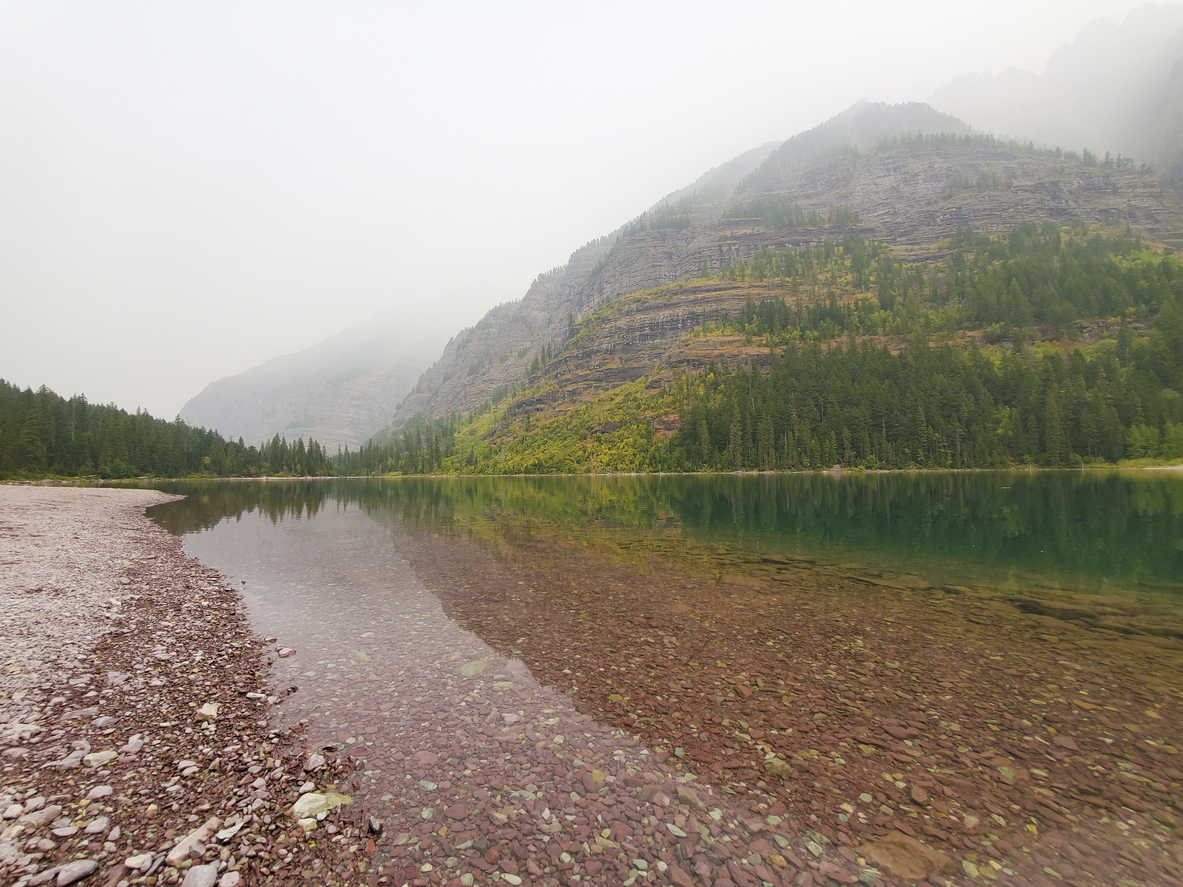
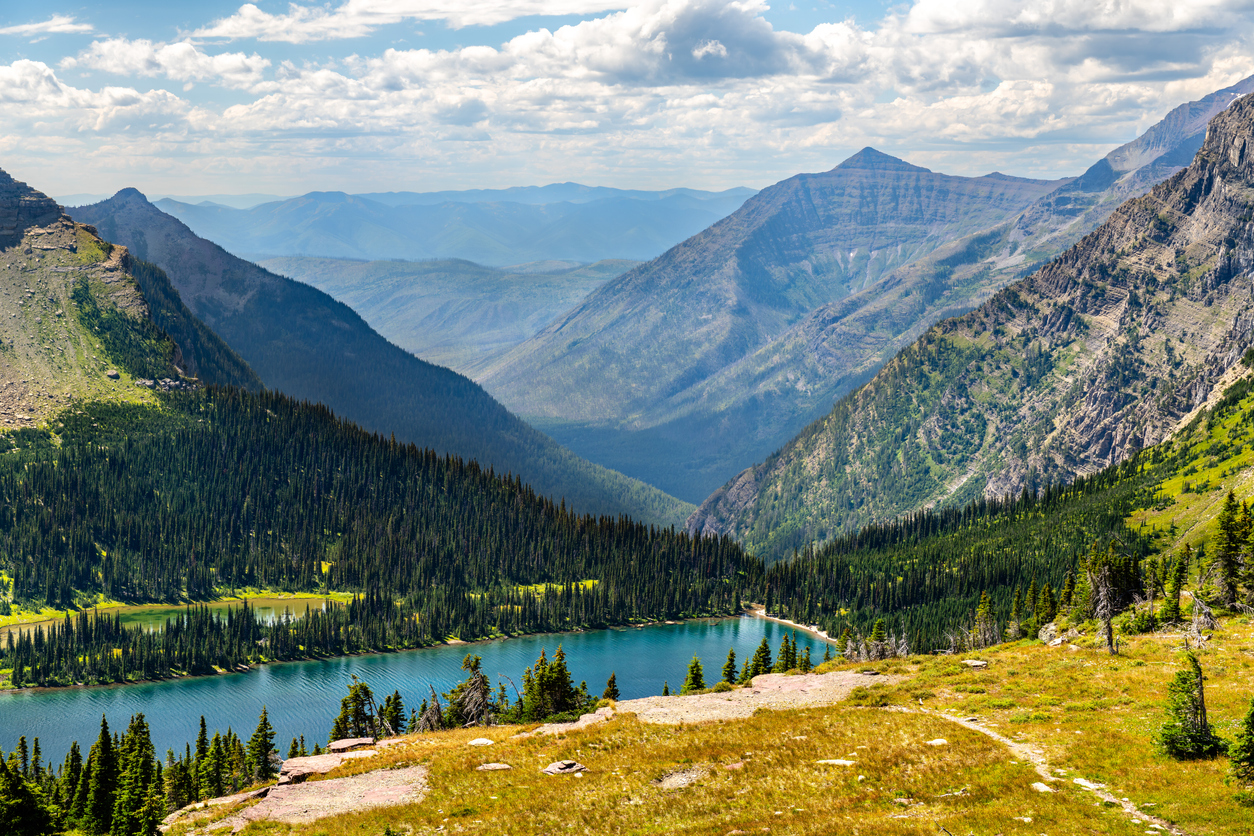
Glacier National Park was established in 1910 and covers about 1,013,322 acres in the northwest corner of the state, making it the only national park located entirely within Montana. It is best known for Going-to-the-Sun Road, more than 700 miles of hiking trails, and alpine lakes fed by real glacier ice.
For example, a first time visitor could easily spend 3 to 4 days here without hiking the same trail twice. Our guide to the best hikes in Glacier National Park covers ten of the most popular routes, and our best time to visit Glacier National Park guide breaks down the season month by month.
Yellowstone National Park’s Montana Side
Yellowstone was established in 1872, making it the first national park in the country, and it covers about 2,219,791 acres in total. Only around 3 percent of that land sits in Montana, with the rest split between Wyoming, which takes up about 96 percent of the park, and Idaho, which takes up the last 1 percent.
Even so, Montana plays a bigger role in a Yellowstone trip than that small percentage suggests. Three of the park’s five entrances sit in Montana: the West Entrance near West Yellowstone, the North Entrance at Gardiner, the lone entrance that regular vehicles can drive through in every season including winter, and the Northeast Entrance near Cooke City. Most visitors to the park each year come through one of these three Montana entrances rather than through Wyoming or Idaho.
Six More National Park Service Sites in Montana
Past the two national parks, Google’s own AI Overview and the National Park Service both group the same six additional places together when people ask about NPS sites in the state.
- Big Hole National Battlefield, near Wisdom, marks where an 1877 battle of the Nez Perce War was fought.
- Bighorn Canyon National Recreation Area, near Fort Smith, spans more than 120,000 acres of canyon country built around a reservoir it shares with Wyoming.
- Little Bighorn Battlefield National Monument sits near Crow Agency on the ground where the 1876 fight between US Army troops and Lakota and Cheyenne forces took place, and Custer National Cemetery shares the same grounds.
- Fort Union Trading Post National Historic Site is a rebuilt 1800s fur trading post just across the state line, in Williston, North Dakota.
- Grant-Kohrs Ranch National Historic Site, in Deer Lodge, keeps a real 1860s cattle ranch running as a working piece of Western history.
- Nez Perce National Historical Park spans sites in four different states tied to the history of the Nimiipuu, or Nez Perce, people, and its Montana units are the Big Hole and Bear Paw Battlefields.
That adds up to eight sites total. A few sources count nine or ten instead, by also listing multi-state routes like the Lewis and Clark National Historic Trail or the Ice Age Floods National Geologic Trail as their own separate entries, since both only pass through a small part of Montana on their way through many other states. Either way, it is the same real places being counted, just grouped differently.
Frequently Asked Questions
How many national parks are in Montana? Two, by the strict National Park designation: Glacier and Yellowstone. Counting every National Park Service site in the state, most sources land on eight, though a few count as many as ten depending on how multi-state trails are treated.
What is the prettiest national park in Montana? That comes down to personal taste, but Glacier is the one most visitors mean, thanks to its alpine lakes, glacier carved valleys, and the views along Going-to-the-Sun Road.
Can you do Glacier and Yellowstone in one trip? Yes, though the two parks sit on opposite sides of the state, so it usually works best as a multi-day road trip rather than a same-day visit to both.
What is the only state with no national park? Not Montana. A handful of states, including Delaware and New Jersey, have no national park within their borders at all.
What is the number one tourist attraction in Montana? Glacier National Park draws more visitors than any other single site in the state.
Planning Your Trip and Where to Stay
Glacier and Grant-Kohrs Ranch sit in the western half of Montana, within a few hours of each other. Yellowstone’s Montana entrances, Little Bighorn, and Bighorn Canyon sit hours away in the southern and eastern parts of the state, closer to Bozeman and Billings than to Glacier. Because of that distance, most trips end up focused on one region rather than trying to see everything in a single visit. If Glacier is on your list, check trail and road conditions before you go, since they change by season, and our best time to visit Glacier National Park guide has the full seasonal breakdown.
If Glacier is the main event on your Montana trip, or the first stop on a bigger Glacier to Yellowstone loop, where you stay in the Flathead Valley makes a real difference. Explore Montana Rentals is based right here, close to the park’s west side entrances, rather than down near Yellowstone’s Montana gateways.
Our local team can match you to the right property, whether that means easy highway access for an early departure toward Yellowstone or a quieter spot near Whitefish for a Glacier-only trip. Homes and cabins range from budget-friendly to larger properties built for groups, with room for everyone’s gear.
Find Your Perfect Stay
Comfort, space, and convenience- everything you need for a relaxing getaway. Explore vacation rentals designed to make your trip effortless.