Avalanche Lake is one of the most popular hikes in Glacier National Park, and it earns that reputation without asking much of you. The trail passes through old growth cedar and hemlock forest, follows a rushing creek, and ends at a lake ringed by cliffs and waterfalls, all without a steep climb.
This trail is one of the ten hikes in our best hikes in Glacier National Park guide. Here is a closer look at the distance, the route, and what to know before you go.
Quick Facts
| Detail | Value |
|---|---|
| Round trip distance | About 4 to 6 miles |
| Elevation gain | About 500 to 730 feet |
| Difficulty | Easy to moderate |
| Estimated time | About 2 to 3 hours round trip |
| Trailhead | Avalanche Creek, off Going-to-the-Sun Road |
| Permit needed | No, day hike only |
A note on the range above. Guides that measure from where the dirt trail branches off list about 4 to 4.8 miles round trip. Guides that measure from the main parking lot, counting the paved Trail of the Cedars loop at the start, list about 6 to 6.2 miles. Both are correct. They are simply measuring from a different starting point, which is also why elevation gain estimates range from 500 to 730 feet. The National Park Service also notes about 275 feet of elevation loss on the way in, so the hike back out means climbing that same stretch again on top of the main climb.
Getting to the Trailhead
The trailhead sits on the west side of Glacier National Park, off Going-to-the-Sun Road, about 5.5 miles east of Lake McDonald Lodge. The parking lot here is small, and it fills early on nearly every clear day in July and August.
For example, arriving by 7:30 in the morning during peak season usually means finding a spot without trouble. Arrive at 10 a.m. instead, and you may end up circling the lot or parking along the road shoulder. If the lot is full, extra parking is available at the Avalanche Picnic Area and the Trail of the Cedars lot nearby, and the park’s free shuttle along Going-to-the-Sun Road also stops here, which is a good backup if you arrive later in the day.
The Hike, Step by Step
Step 1: Trail of the Cedars to Avalanche Gorge (first half mile) The trail starts on the paved and boardwalk Trail of the Cedars, shared with visitors doing that short loop on its own. Within the first half mile, you will pass Avalanche Gorge, a narrow channel carved into the rock with bright turquoise water rushing through it. A footbridge here is one of the most photographed spots on the whole hike.
Step 2: Dirt path along Avalanche Creek (half mile to about 2 miles) The trail leaves the boardwalk here and becomes a dirt path, climbing gently alongside Avalanche Creek. Most of the elevation gain happens in this stretch, through a forest of old cedar and hemlock trees that block out a lot of direct sun, which keeps the hike cool even on a hot day. This dirt section can get slick with mud or standing water, especially early in the season or after rain, so shoes or boots with good tread grip are a better choice than smooth-soled sneakers.
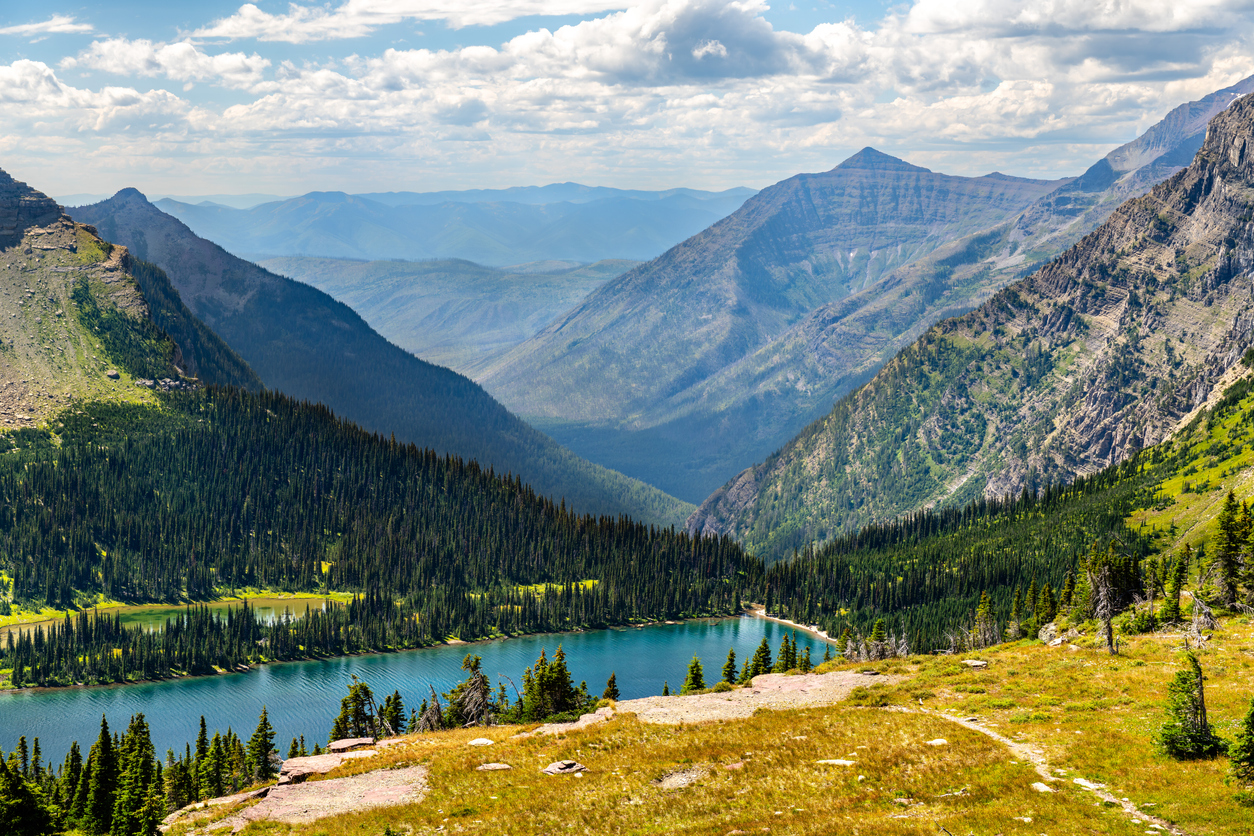
Step 3: Forest thins out and mountain views open up (roughly halfway) Around the halfway point, the trees start to thin out, and the first real mountain views appear ahead of you.
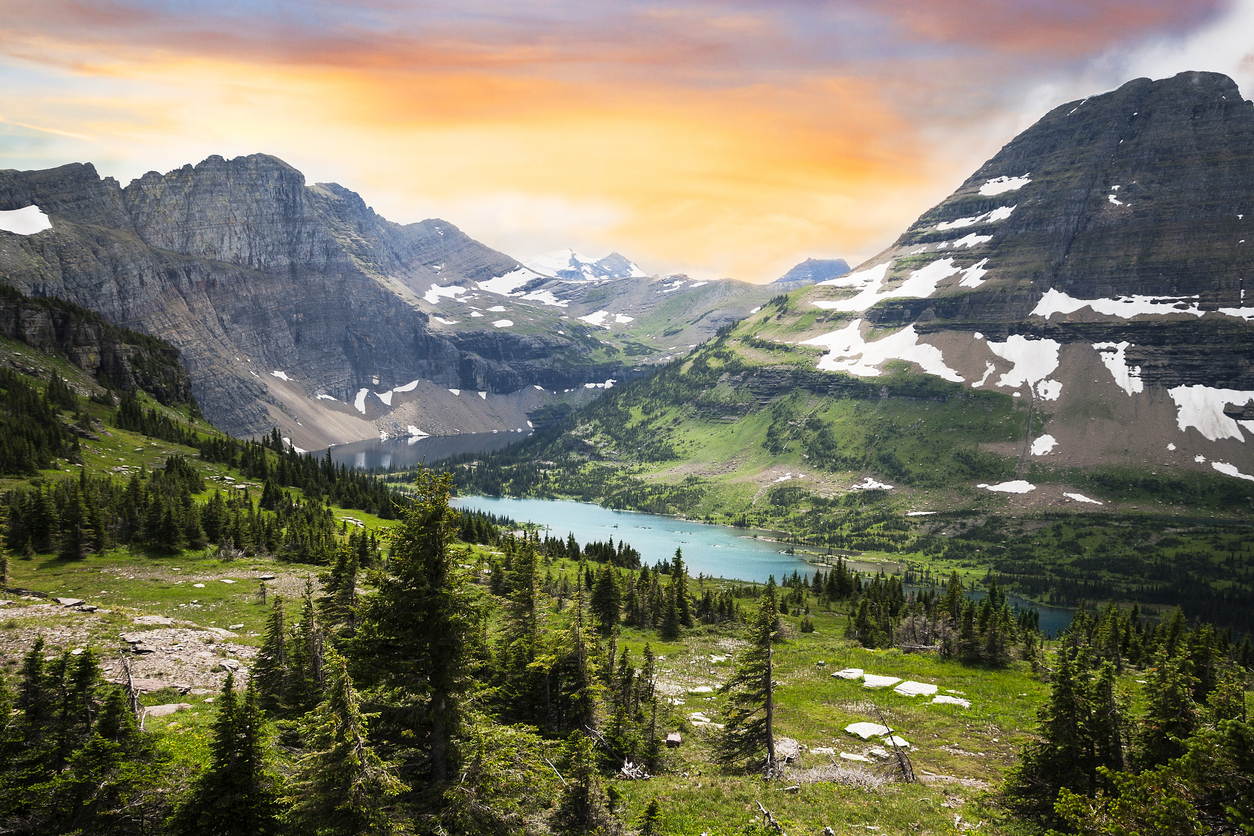
Step 4: Arrival at Avalanche Lake The final stretch opens onto Avalanche Lake itself, with steep cliffs rising on the far side. Several waterfalls drop down those cliffs into the lake, especially in June and early July when snowmelt is at its heaviest.
What to Expect at the Lake
A pit toilet is available near the lake, which is useful information on a trail this popular. The shoreline makes a good spot for photos and a lunch break, and some visitors fish from the far side of the lake. Most hikers stop right where the trail first reaches the water, so walking a little further along the shore toward the far end usually means fewer people and a quieter view of the waterfalls.
One thing worth knowing ahead of time: Avalanche Lake is not an official swimming beach the way Lake McDonald or Bowman Lake are. People do wade in on a hot day, but if a swim is the main goal, those two lakes are a better bet.
Best Time to Hike Avalanche Lake
Because this trailhead sits on the lower, west side of the park, it usually opens earlier in the year than the high alpine trails near Logan Pass. Most years, it is accessible by late May or June.
The waterfalls feeding the lake are at their most dramatic during peak snowmelt in June and early July, and taper off by August. For a fuller picture of weather and crowds across the whole park by month, our best time to visit Glacier National Park guide covers that in more depth.
What to Know Before You Go
- Carry bear spray. This is grizzly and black bear country, and rangers sometimes close the trail for a few hours or days if a bear is active nearby.
- Check the trail status page. Conditions and closures change during the season, so it is worth a quick look before you drive out.
- No permit needed. This is a day hike, so no permit is required. Only overnight backcountry trips need one.
- Plan the drive. If you are coming from elsewhere in the park, plan you drive beforehand.
- Bring a trail map. Cell service is unreliable this deep in the park, so download or print a map of the route ahead of time, or pick one up at a visitor center.
Frequently Asked Questions
How long does it take to hike Avalanche Lake?
Most hikers take about 2 to 3 hours round trip, depending on pace and how long you stay at the lake.
Is the Avalanche Lake trail hard?
No. It is rated easy to moderate, with a gentle grade for most of the way and no technical sections.
Is Avalanche Lake worth the hike?
Yes. It is one of the most popular hikes in the park because it delivers big scenery, old-growth forest, a scenic gorge, and a lake with waterfalls, for a distance most people can manage in a morning.
Do you need a permit to hike to Avalanche Lake?
No. Day hikes do not require a permit. Only overnight backcountry camping trips do.
Can you swim in Avalanche Lake?
It is not set up as an official swimming spot, though people do wade in. Lake McDonald and Bowman Lake are better choices if swimming is the goal.
Plan Your Stay Near Avalanche Lake
Because the Avalanche Creek lot fills so early, where you sleep the night before matters more than usual. A property near West Glacier or Apgar on the west side of the park cuts your drive down to a few minutes instead of an hour, which can be the difference between a parking spot and a full lot.
Book with Explore Montana Rentals and you get more than a bed for the night. Look for a property with a hot tub to soak sore feet after the hike, a washer and dryer for muddy trail clothes, and a full kitchen to put together breakfast and a trail lunch before an early start. Our local team knows this side of the park well and can help you find a place that puts you close to the trailhead instead of stuck in a line of cars at sunrise.
Find Your Perfect Stay
Comfort, space, and convenience- everything you need for a relaxing getaway. Explore vacation rentals designed to make your trip effortless.