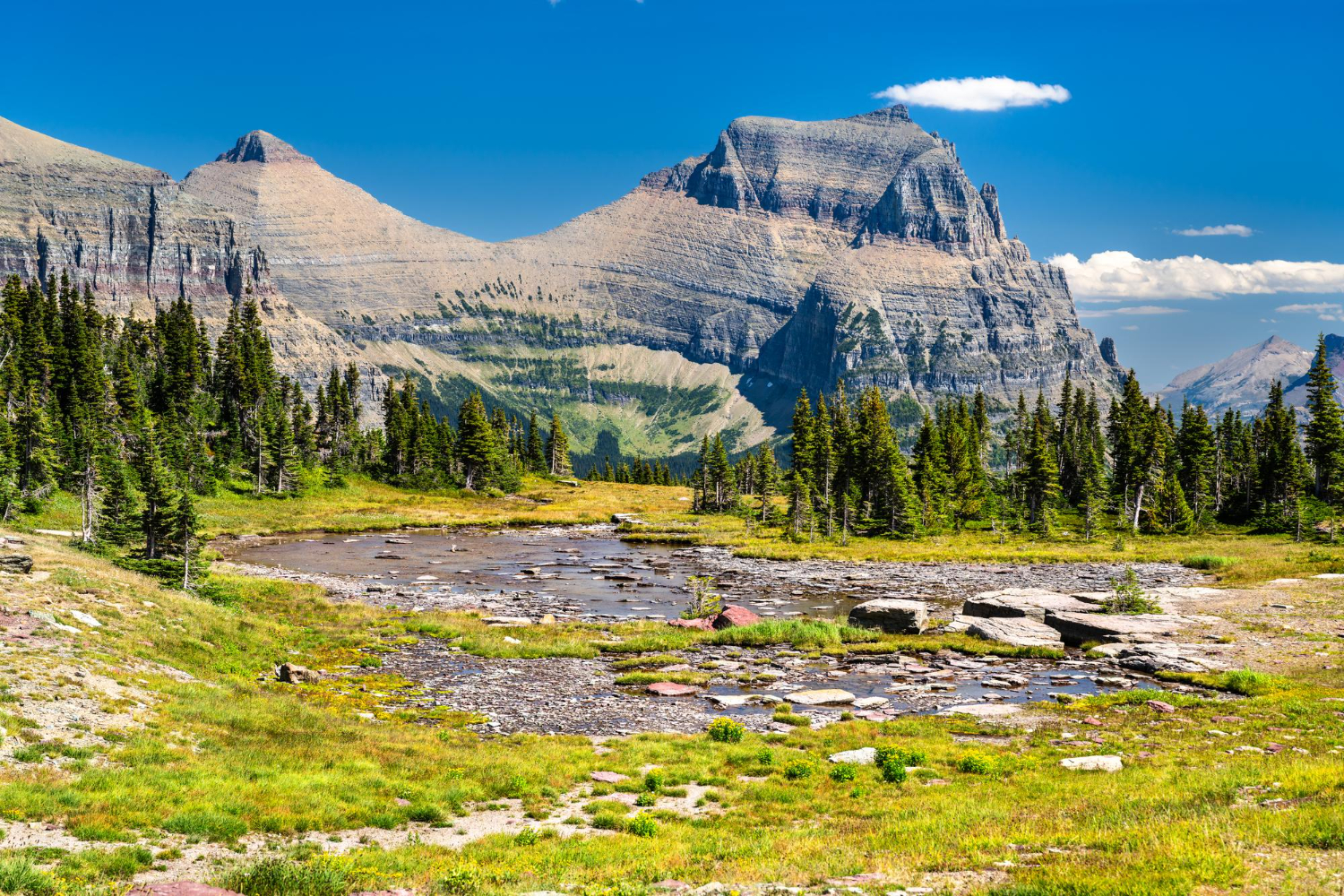
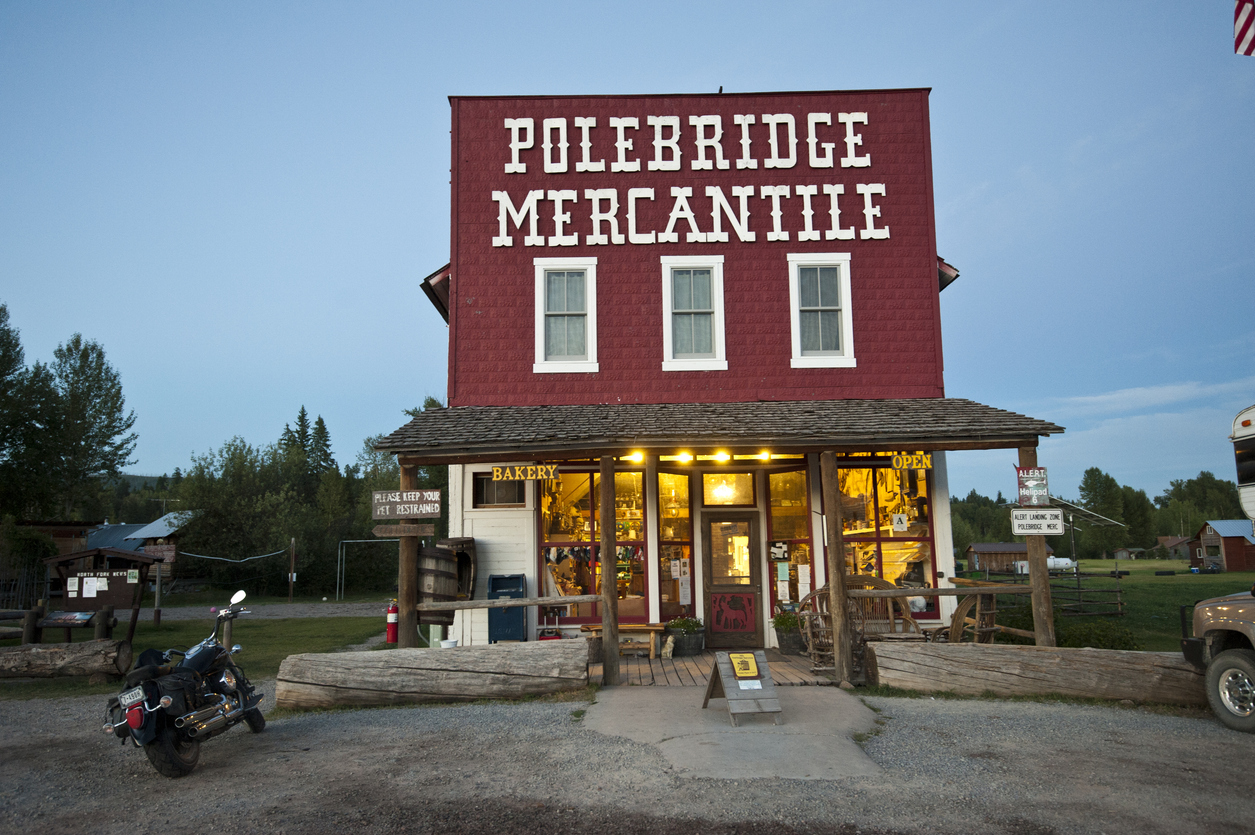
Montana is one of the great road trip states in America. It’s the fourth-largest state in the country, with wide-open highways, speed limits as high as 80 mph, virtually no traffic outside of a handful of gateway towns, and scenery that shifts from jagged Rocky Mountain peaks to rolling prairie to glacial lake country within a single day’s drive.
A Montana road trip doesn’t require careful optimization — almost any route through the state delivers spectacular scenery. But knowing which roads go where, how long each stretch actually takes, and what’s worth slowing down for makes the difference between a good trip and a truly memorable one.
Here are the best Montana road trip ideas, from a focused northwest Montana loop anchored by Glacier National Park to the classic Glacier-to-Yellowstone run and beyond — with day-by-day itineraries, practical tips, and advice on where to stay along the way.
Montana Road Trip Routes at a Glance
| Route | Duration | Miles | Best for |
| Northwest Montana Loop (Glacier anchor) | 5–7 days | ~400 mi | First-timers; Glacier-focused; shorter trip |
| Glacier to Yellowstone | 10–12 days | ~900 mi | Epic two-park itinerary; best of Montana |
| Western Montana Scenic Loop | 7–9 days | ~600 mi | History, small towns, Flathead Lake, Missoula |
| Beartooth Highway & Yellowstone Loop | 4–5 days | ~350 mi | Dramatic mountain driving; south Montana |
| Cross-State Highway 2 (Hi-Line) | 3–4 days | ~650 mi | Off-the-beaten-path; wide open east Montana |
Road Trip 1: The Northwest Montana Loop — 5 to 7 Days
This is the road trip to choose if Glacier National Park is your primary destination. It keeps you in northwest Montana — the most visually dramatic corner of the state — and gives you enough time to do the park properly without rushing. Fly into Glacier Park International Airport (FCA) in Kalispell and use the loop as a self-contained itinerary.
Route: Kalispell → Whitefish → West Glacier → Glacier National Park → St. Mary → Many Glacier → Whitefish → Flathead Lake → Bigfork → Kalispell
Day 1: Arrive in Kalispell / Whitefish
Fly into FCA and spend your first night in Kalispell or Whitefish, 12 miles north. Whitefish has the better restaurant scene — grab dinner downtown, stock up on groceries and park supplies, and be in bed early. You’ll want to be on the road to Glacier before 7 AM the next morning.
Stay: Kalispell (more affordable) or Whitefish (livelier town). Vacation rentals in either town work well for groups or multi-night stays.
Day 2: Going-to-the-Sun Road (West to East)
This is the centerpiece of the northwest Montana road trip. Drive US-2 from Whitefish or Kalispell to the West Glacier entrance — 25–30 miles, about 40 minutes. Enter the park early, stop at Lake McDonald’s colorful rock shoreline, and wind up Going-to-the-Sun Road toward Logan Pass.
Arrive at Logan Pass before 8 AM during peak season to guarantee parking. Spend two to three hours at the summit — the Hidden Lake Overlook hike (2.7 miles round trip) is the best short trail from the pass. Continue east past Jackson Glacier Overlook and St. Mary Lake, finishing the day on the park’s quieter east side.
Stay: St. Mary or East Glacier (east side lodging options; budget-friendly and well-positioned for the next day).
Day 3: Many Glacier Valley
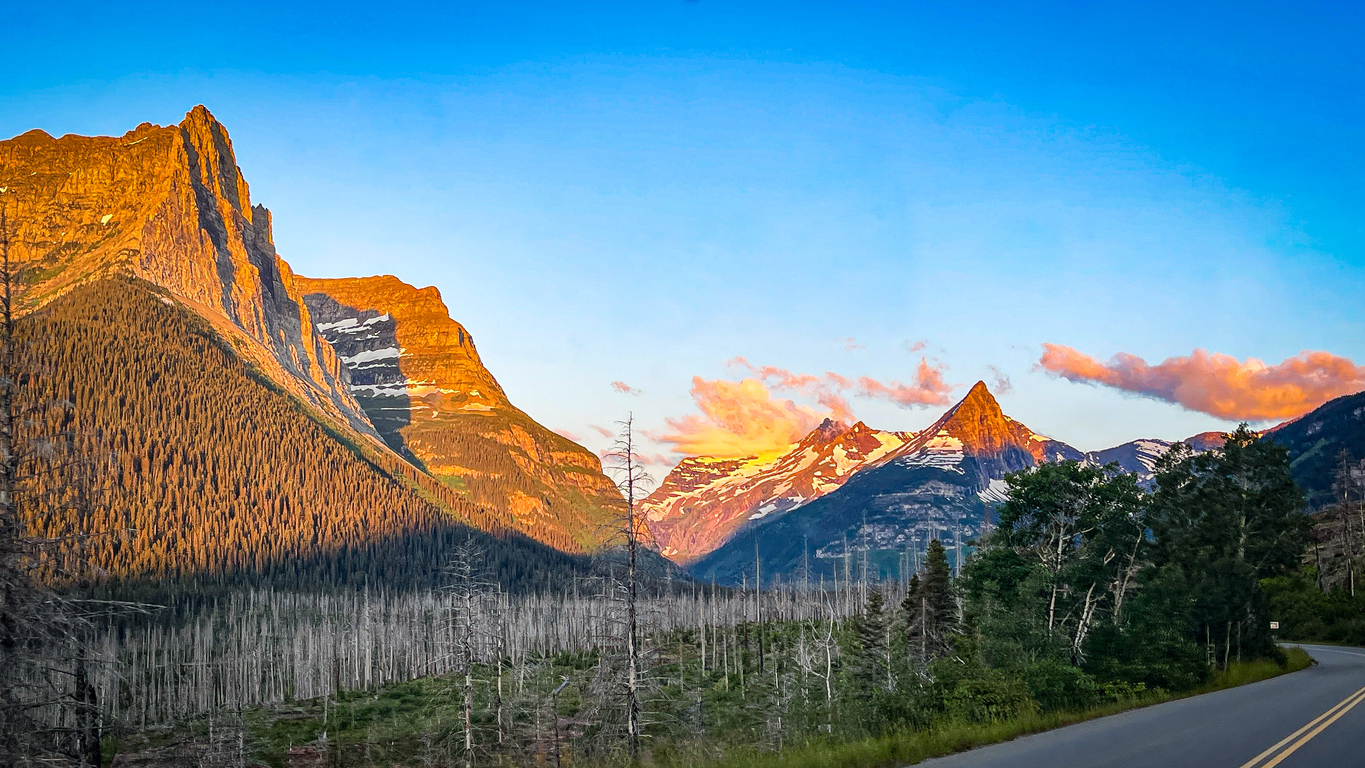
Drive north from St. Mary to the Many Glacier area — the most dramatic valley in the park and the best place for wildlife watching. Grizzly bears, moose, bighorn sheep, and mountain goats are all regularly spotted here. Take the boat tour across Swiftcurrent Lake (narrated, about 45 minutes), or hike the Grinnell Glacier Trail (10.6 miles round trip, strenuous) for jaw-dropping views. The historic Many Glacier Hotel, built in 1914, is worth a stop even if you’re not staying — grab a drink on the porch overlooking Swiftcurrent Lake.
Stay: St. Mary or East Glacier again, or drive back to Whitefish for a night in town.
Day 4: West Glacier — Avalanche Lake & Lake McDonald
Return to the west side via Going-to-the-Sun Road (now familiar — enjoy it from a different direction). Start the morning at Avalanche Creek: walk the flat Trail of the Cedars (0.9-mile loop through old-growth cedar forest) and continue to Avalanche Lake (4.4 miles round trip) for one of the most photogenic spots in the park. Spend the afternoon kayaking on Lake McDonald — rentals are available near Apgar Village.
Stay: West Glacier, Columbia Falls, or Whitefish.
Day 5: Whitefish and Whitefish Mountain
Take a day off from the national park and explore the area around Whitefish. In summer, the Danny On Trail on Whitefish Mountain offers a hike to the summit (about 3.5 miles one way) with sweeping views of the Flathead Valley and Glacier’s peaks. The Whitefish Lake State Park, right in town, has a sandy beach perfect for a lazy afternoon. Spend the evening on Central Avenue — Whitefish has excellent restaurants and a lively bar scene for a small mountain town.
Day 6: Flathead Lake
Drive south from Kalispell along the eastern shore of Flathead Lake — the largest natural freshwater lake west of the Mississippi. Stop in Bigfork, a small arts village on the lake’s northeast arm with great restaurants and galleries. Continue south to Polson, where boat tours and kayak rentals operate throughout summer. In late summer (late July through August), roadside cherry stands dot the eastern shore — stop and pick up a bag. Drive back north to Kalispell for your final night.
Day 7 (optional extension): Lone Pine State Park & Downtown Kalispell
If you have an extra morning before flying out, hike the trails at Lone Pine State Park (3 miles west of downtown Kalispell) for panoramic views of the valley and a final look at Glacier’s peaks on the horizon. Walk downtown Kalispell before heading to FCA for your flight.
Road Trip 2: Glacier National Park to Yellowstone — 10 to 12 Days
This is the classic Montana road trip — and arguably the best two-park road trip in America. Glacier in the north and Yellowstone in the south represent opposite ends of Montana’s geological and ecological spectrum: the glacially carved Rocky Mountain north versus the volcanic, geothermal south. Together, they make for one of the most spectacular road trip pairings anywhere in the world.
Fly into Glacier Park International Airport (FCA) in Kalispell and fly out of Bozeman Yellowstone International Airport (BZN) — or do it in reverse. The total driving distance between the two parks is roughly 350–400 miles depending on your exact route.
Route: Kalispell/Whitefish → Glacier National Park (3–4 days) → Helena or Missoula overnight → Bozeman → Yellowstone National Park (3–4 days) → Bozeman fly-out
Days 1–4: Glacier National Park
Follow the northwest Montana loop itinerary above for your Glacier days — Going-to-the-Sun Road, Many Glacier, Avalanche Lake, and Lake McDonald cover the park’s west side highlights. Four days gives you time to see the park without rushing and leaves room for one weather delay or slow morning.
Day 5: Drive South — Glacier to Missoula or Helena
Leave Glacier and head south. Missoula (137 miles, about 2.5 hours from Kalispell) is the natural midpoint stop — a lively university city on the Clark Fork River with excellent breweries, a great walking downtown, and a genuinely cool local food scene. Alternatively, push on to Helena (240 miles, about 3.5 hours) to be better positioned for Bozeman and Yellowstone the next day.
Missoula highlights: Flathead Lake (on the drive south), Clark Fork Riverfront Trail, Draught Works Brewery, the Saturday Farmers Market in summer.
Day 6: Bozeman
Bozeman is Montana’s fastest-growing city and the best food and culture stop between Glacier and Yellowstone. The Museum of the Rockies houses one of the world’s best dinosaur fossil collections, including multiple T-rex and Triceratops skeletons. Downtown Bozeman has excellent restaurants, craft breweries, and outdoor outfitters. MAP Brewing and Montana Ale Works are both worth a stop.
Days 7–10: Yellowstone National Park
Yellowstone deserves three to four days at minimum. The park is enormous (larger than Rhode Island and Delaware combined) and divides naturally into geographic areas: the Old Faithful corridor in the southwest, the Grand Canyon of the Yellowstone in the center, Mammoth Hot Springs and the Lamar Valley in the north, and the Norris Geyser Basin. Each area is distinct and worth half a day to a full day on its own.
Don’t miss:
- Old Faithful and the Upper Geyser Basin — the park’s most iconic feature
- Grand Prismatic Spring at Midway Geyser Basin — best viewed from the overlook trail
- Grand Canyon of the Yellowstone — two dramatic waterfalls in a yellow-walled canyon
- Lamar Valley — the best wildlife watching in the park; bison, wolves, and bears
- Mammoth Hot Springs — terraced travertine formations unlike anything else in the park
West Yellowstone, MT (just outside the park’s west entrance) is a practical and affordable base for Yellowstone nights. The town has dozens of hotels, restaurants, and outfitters.
Day 11: Drive to Bozeman, Fly Out
The drive from West Yellowstone to Bozeman is 90 miles, about 1.5 hours. Stop in Livingston on the way — a charming western town on the Yellowstone River with good lunch options and an excellent local art scene. BZN is 26 miles east of Bozeman, easy to reach for an afternoon or evening flight.
Road Trip 3: Western Montana Scenic Loop — 7 to 9 Days
Western Montana is the most diverse and underrated road trip region in the state. It runs from Glacier in the north through the Flathead Valley, Missoula, the Clark Fork River corridor, Virginia City and the ghost towns of southwest Montana, and back north through the Big Hole Valley. It’s a loop that mixes national park grandeur with small-town Montana character.
Route: Kalispell → Glacier → Flathead Lake → Missoula → Philipsburg → Virginia City → Butte → Helena → Great Falls → Kalispell
Highlights of the Western Montana Loop
Flathead Lake
The 15-mile drive along the lake’s eastern shore between Polson and Bigfork is one of the most scenic stretches of road in Montana. Bigfork is worth an overnight stop for its restaurants and proximity to the lake.
Missoula
Montana’s most livable city — with a university-driven culture, excellent local restaurants, the Clark Fork Riverfront, and some of the best craft breweries in the state. Budget two nights here.
Philipsburg
A perfectly preserved mining town in the Pintler Mountains with a candy store, award-winning brewery (Philipsburg Brewing), and the Broadway Hotel. A one-night stop here is a genuine highlight of the western loop.
Virginia City and Nevada City
Two gold rush ghost towns an hour south of Butte. Virginia City has been faithfully restored to its 1860s gold rush appearance; Nevada City is a folk village of relocated Montana historic structures. Together they make a half-day stop unlike anything else on the trip.
Butte
Built on a copper mine and proud of it. The World Museum of Mining and the Copper King Mansion are the standout attractions. Butte also has one of the best and most eclectic bar scenes in the state — it’s the kind of place that’s more interesting than it looks from the highway.
Helena
Montana’s capital city sits in a mountain valley and has a walkable downtown, excellent craft beer at Blackfoot River Brewing and Lewis & Clark Brewing, and the Montana State Capitol worth a quick look.
Road Trip 4: The Beartooth Highway & Yellowstone Loop — 4 to 5 Days
If you only have four to five days and Glacier isn’t the priority, the Beartooth Highway loop is the most concentrated stretch of extraordinary scenery in Montana. The Beartooth Highway (US-212) between Red Lodge and Cooke City is widely considered one of the most spectacular scenic drives in America — a 68-mile route that climbs to nearly 11,000 feet across a vast alpine plateau with 360-degree views of the Beartooth Mountains.
Route: Billings → Red Lodge → Beartooth Highway → Cooke City → Yellowstone National Park → Gardiner → Livingston → Billings
The Beartooth Highway is typically open from late May through mid-October. Drive it from Red Lodge to Cooke City in the morning (about 2 hours), pause at the summit for photos and a walk through the tundra, and enter Yellowstone through the northeast entrance — the park’s most scenic and least-visited entry point, running through the Lamar Valley.
Road Trip 5: Highway 2 Hi-Line — 3 to 4 Days
For road trippers who want the real Big Sky experience — genuine emptiness, no crowds, and the sensation of being the only car on an endless highway — US Highway 2 along the northern tier of Montana is the route. The Hi-Line runs 650 miles from the North Dakota border to Glacier National Park, crossing the open plains of northern Montana past small towns, grain elevators, and views that go on forever.
This isn’t a scenery-maximizing route — it’s a pace-and-solitude route. There are few tourists, almost no traffic, and a string of small Montana towns that feel genuinely untouched. Drive it west to east starting from Glacier (Browning and Cut Bank on the east side of the park) and ending in Havre or Williston, or reverse it as a prelude to a Glacier visit.
Havre has the most interesting stop on the Hi-Line: Havre Beneath the Streets, an underground tour of the historic tunnels and storefronts below the city from the early 1900s.
Montana Road Trip Tips: What to Know Before You Go
How many days do you need for a Montana road trip?
For a northwest Montana loop focused on Glacier National Park, five to seven days is the sweet spot — enough time to drive the Going-to-the-Sun Road, explore both sides of the park, visit Many Glacier, and have a day for Flathead Lake and Whitefish. For the Glacier-to-Yellowstone route, plan ten to twelve days minimum. Anything less and you’ll spend more time driving than exploring.
What is the best month for a Montana road trip?
July and August offer the best weather and full access to Glacier’s Going-to-the-Sun Road, Yellowstone’s backcountry, and most services throughout the state. They’re also the busiest months. September is arguably the best month for experienced travelers — crowds drop significantly after Labor Day, larch trees in Glacier turn golden, wildlife is active heading into fall, and Going-to-the-Sun Road stays open through mid-October. Late June is excellent for seeing snowfields still present at Logan Pass and avoiding peak crowds.
What is the most beautiful drive in Montana?
Going-to-the-Sun Road in Glacier National Park is Montana’s most iconic drive and one of the most spectacular in North America. The Beartooth Highway between Red Lodge and Cooke City is a close second — more dramatic from a pure elevation perspective. The drive along the eastern shore of Flathead Lake on US-93 between Polson and Kalispell is the most underrated. All three are worth driving in the same trip if your route allows.
Cell service and navigation
Cell service in Montana is unreliable outside of cities and major highway corridors. Inside Glacier National Park, service is essentially nonexistent except near the entrance stations. Download offline maps before you go — Google Maps, Maps.me, and Gaia GPS all work offline once downloaded. A paper road atlas is worth having in the glove compartment as a backup.
Speed limits and driving times
Montana’s highway speed limit is 70–80 mph on most interstates and primary highways. Distances that look long on a map go by quickly. The one exception: Going-to-the-Sun Road has a 25–45 mph limit throughout and takes 2–3 hours to drive end-to-end even without stops. Budget honest driving time and don’t overpack your daily mileage — the scenery demands unscheduled stops.
Gas and services
Fill up your tank whenever you pass through a town of any size, especially on the Hi-Line route or between Cooke City and Gardiner near Yellowstone. Gas stations can be 60–100 miles apart in rural Montana, and some small-town stations close early. There are no gas stations inside Glacier National Park itself — fill up in Whitefish, Columbia Falls, or West Glacier before entering.
What to pack for a Montana road trip
Beyond standard road trip supplies, Montana specifically requires:
- Layers and a rain jacket — weather changes quickly in the mountains; Logan Pass can be 30°F colder than the valley in July
- Bear spray if hiking — available at outfitters in Whitefish, West Glacier, and Gardiner
- America the Beautiful annual pass ($80) — covers Glacier, Yellowstone, and all national parks for a year; worth it if visiting both
- Binoculars — essential for wildlife watching in Glacier and Yellowstone
- Offline maps downloaded before you leave — cell service is not reliable in most of the state
- Cash — some rural Montana businesses don’t accept cards
- Sunscreen — high elevation means intense UV exposure even on cool days
Where to Stay on a Montana Road Trip
Montana has a range of accommodation options from campgrounds inside the national parks to budget motels in gateway towns to full-service hotels in Bozeman and Missoula. For the northwest Montana portion of any route, Whitefish and Kalispell offer the best combination of convenience, amenities, and proximity to Glacier.
For families and groups spending multiple nights in one place, vacation rentals are a significantly better value than hotel rooms — particularly in Whitefish, where a rental property gives you a full kitchen, laundry for gear and hiking clothes, and space to spread out after long days in the park.
Explore Montana Rentals offers professionally managed vacation homes near Glacier National Park and Whitefish Mountain Resort — ideal as a multi-night base for a northwest Montana road trip. Browse our vacation rentals and plan your home base before you hit the road.
FAQs: Montana Road Trip Planning
What is the best road trip in Montana?
The best Montana road trip depends on your time and priorities. The northwest Montana loop anchored by Glacier National Park is the best choice for a shorter trip (5–7 days). The Glacier-to-Yellowstone route is the most epic and rewarding for visitors with ten or more days. The Beartooth Highway loop offers the most concentrated dramatic scenery for a 4–5 day southern Montana trip.
Can you do a Montana road trip in a week?
Yes — a week is enough for a focused northwest Montana trip covering Glacier National Park, Whitefish, and Flathead Lake. It’s not enough for the Glacier-to-Yellowstone route without significant rushing. If you only have a week and want to see both parks, fly into FCA and out of BZN (or reverse) and drive straight between the two, spending three days at each.
When should you NOT do a Montana road trip?
Winter (November through April) limits access to Glacier significantly — Going-to-the-Sun Road closes, many park facilities shut down, and some mountain passes may be icy. Winter is a fantastic time to visit if skiing at Whitefish Mountain Resort is part of the plan, but it’s not ideal for a Glacier-centered road trip. Early June can also be tricky if you want full access to Logan Pass, as the road typically doesn’t open until late June.
Do you need a 4WD vehicle for a Montana road trip?
No — all of the main routes in this guide are paved and easily drivable in a standard sedan or rental car. A mid-size SUV is recommended for better visibility and comfort, and it provides peace of mind if you detour onto any gravel Forest Service roads. 4WD is only necessary if you’re venturing into the backcountry or traveling in winter conditions.
Is it expensive to road trip in Montana?
Montana is generally more affordable than comparable western destinations. Gas is reasonably priced, and meals in small towns are often inexpensive. The main cost spikes are lodging in Whitefish and West Glacier during peak summer season (book well in advance), park entrance fees (covered by the $80 America the Beautiful Pass), and activity costs for boat tours, rafting, or horseback riding. Budget travelers can keep costs down by staying in Kalispell instead of Whitefish and cooking their own meals in a vacation rental.
The Road Is the Destination
Montana doesn’t demand a perfectly optimized itinerary. It rewards curiosity — the willingness to pull over when you see a hawk on a fence post, to follow a brown sign to a waterfall you didn’t know was there, to linger in a small town longer than you planned because the people at the bar had good stories.
Whichever route you choose, build in slack. The best moments on a Montana road trip almost always happen slightly off schedule.